
I’ve spent 28 years managing and optimizing sales channels — from the early days of e-commerce to the complex, omnichannel world we live in today. Over those years, I’ve learned that success doesn’t come from being everywhere; it comes from knowing where your customers are, how each channel behaves, and how to connect them into one seamless experience.
At Shop Optimizers, we specialize in that exact balance — creating profitable, data-driven channel ecosystems that actually work together.
Channel Management Is More Than Just Listing Products
Channel management isn’t simply about putting your products on multiple platforms. It’s about coordinating how those platforms communicate, complement, and scale together. As Shopify defines it, it’s the process of managing every channel — your website, marketplaces, social commerce, and brick-and-mortar — in a way that strengthens your brand instead of scattering it.
Over nearly three decades, I’ve watched brands fail because their website said one thing, Amazon another, and their retail stores something else. That disjointed messaging confuses customers and destroys loyalty.
Multi-Channel vs. Omnichannel: The Evolution I’ve Lived Through
In the early 2000s, “multi-channel” just meant being on your website and maybe eBay. By the 2010s, it shifted to omnichannel — creating one connected experience no matter where a customer shopped. (Wikipedia)
I’ve watched this evolution firsthand. A customer might start on Instagram, compare on Amazon, and end up purchasing on your website. If those systems don’t talk, your brand loses data, sales, and trust.
That’s why, at Shop Optimizers, we build systems that sync product data, analytics, and inventory across all touchpoints — and keep messaging unified through optimized on-site SEO and structured internal linking strategies.
What Makes a Channel Strategy Work
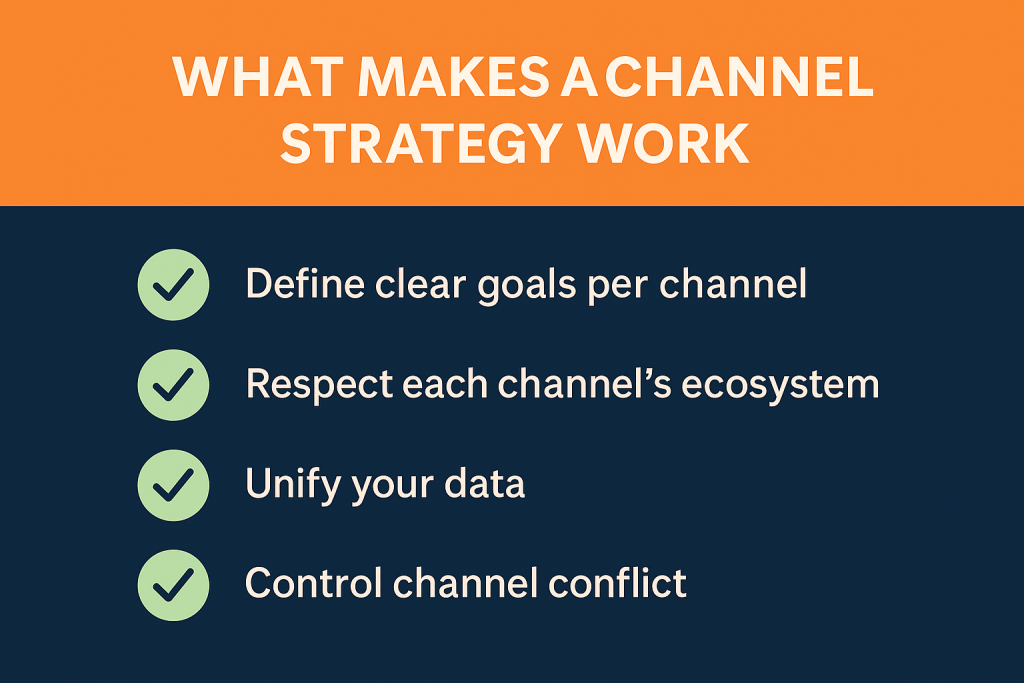
After optimizing channels for thousands of SKUs, here’s what I know works:
1. Define clear goals per channel.
Not every channel serves the same purpose. For instance, Amazon might drive volume, while your website builds long-term brand equity. (Ansira)
2. Respect each channel’s ecosystem.
Every platform — from BigCommerce to Walmart Marketplace — has its own algorithm and audience behavior. You can’t copy-paste listings.
3. Unify your data.
Without accurate analytics and inventory syncs, you’re flying blind. That’s why we focus on connecting GA4, Google Merchant Center, and real-time channel reporting dashboards for every client.
4. Control channel conflict.
A brand’s value can collapse if pricing or messaging isn’t consistent. We monitor MAP policies, adjust feeds, and structure consistent pricing rules to prevent internal competition between channels.
The E-Commerce Timeline Through My Eyes
- Early 2000s: Retail and catalog were king. E-commerce was new territory.
- 2005–2015: Marketplaces exploded. Amazon and eBay became essential.
- 2016–2020: Mobile shopping, social commerce, and influencer marketing took over.
- 2021 and beyond: We’re in the omnichannel age — where customers expect instant, connected experiences from TikTok Shop to your checkout page.
Through every phase, Shop Optimizers has adapted — blending technical SEO, paid strategy, and performance analytics into cohesive growth plans.
Common Channel Mistakes I Still See
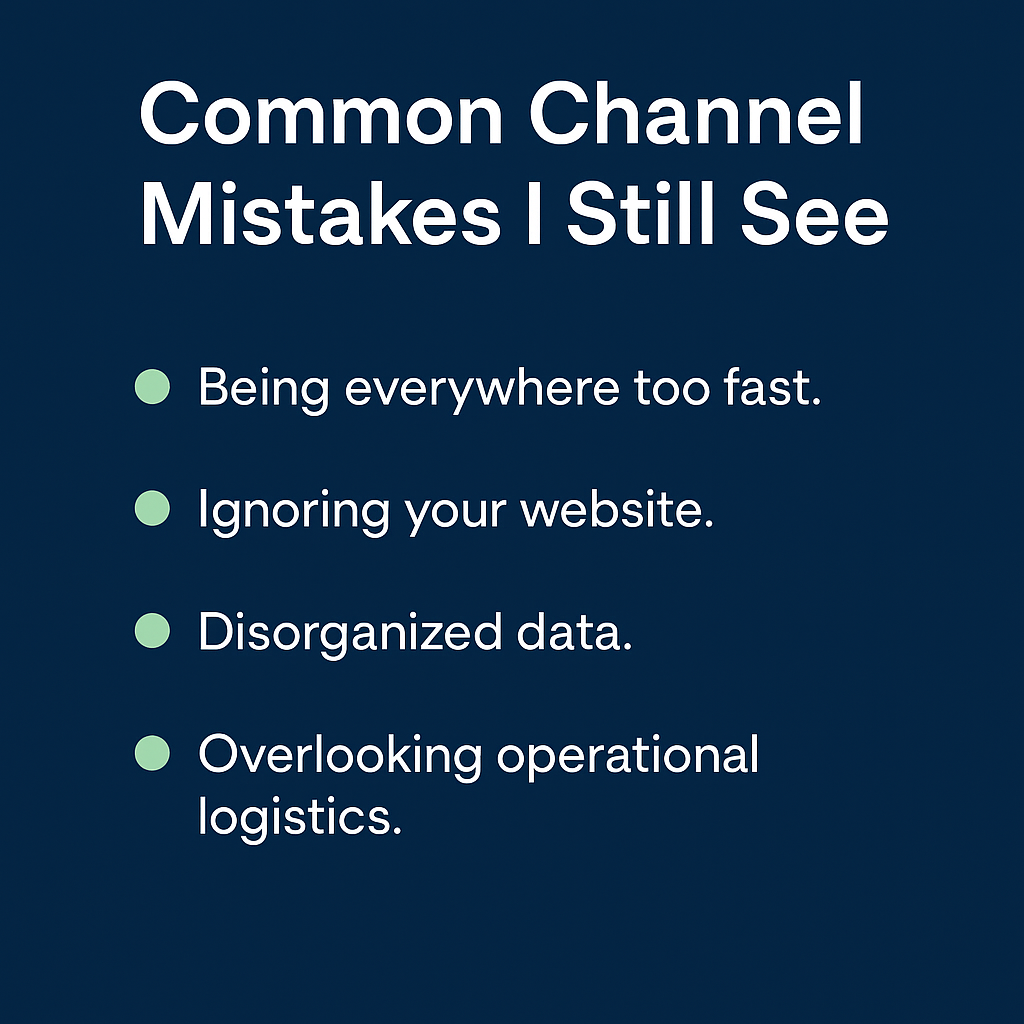
- Being everywhere too fast. Focus beats volume. Start with a few channels and master them.
- Ignoring your website. It’s your foundation. Everything else should funnel back to it.
- Disorganized data. If your feeds and analytics aren’t synced, your decisions are guesses.
- Overlooking operational logistics. Channels only succeed when fulfillment, returns, and support are aligned.
We’ve helped businesses of every size fix these issues with proven product page optimization, SEO audits, and channel reporting dashboards.
How Shop Optimizers Brings It All Together
Here’s how we make channels work together instead of against each other:
- Channel Audits: We identify what’s working and what’s broken.
- Channel Mapping: We prioritize high-return platforms.
- System Integration: Syncing product data, pricing, and promotions between site, marketplaces, and social.
- Continuous Optimization: Testing headlines, adjusting feeds, and improving conversion through ongoing data.
If you haven’t yet, take a look at our Services and Case Studies to see real results.
The Future of Channel Management
The next five years will redefine how brands manage visibility. I’m already seeing these trends shaping what’s next:
- Voice commerce and AI-powered automation will make personalization faster and smarter.
- Headless commerce (Wikipedia) will separate backend and frontend, letting brands build faster across multiple channels.
- Sustainability & transparency will become major differentiators — customers want to know where and how they buy.
Final Thoughts
After 28 years of doing this, my biggest takeaway is simple:
Channel management isn’t about being everywhere — it’s about being strategic, consistent, and connected.
At Shop Optimizers, we’ve lived that philosophy for decades. Whether you’re an emerging brand or a seasoned retailer, our goal is to help you dominate the right channels — not just more of them.
Let’s talk about your channel strategy: shopoptimizers.com
— Jesse Temple
Founder, Shop Optimizers